
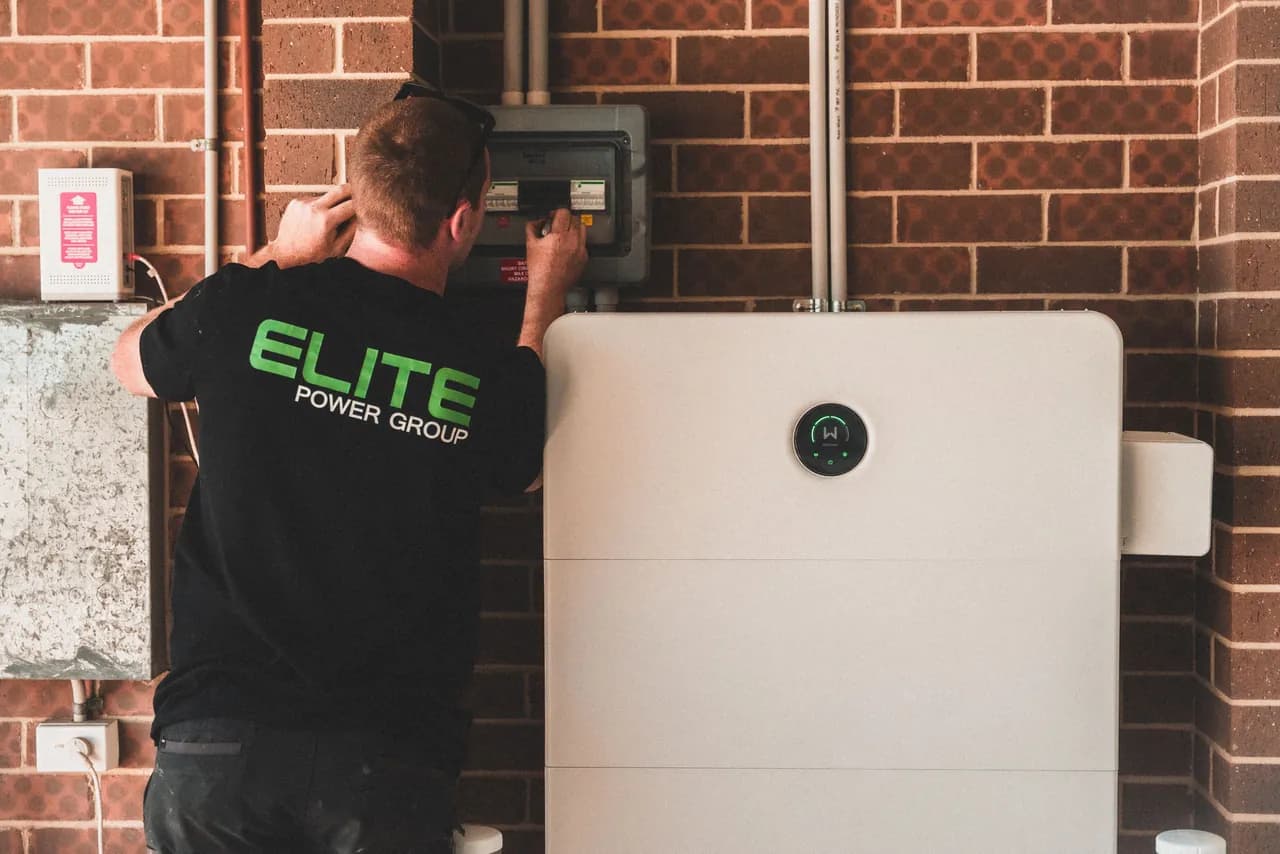
Battery Energy Storage (BESS)
Shift the peak, hold the site up, and keep the process running through a dip.
Typical size
From 50 kWh to multi-MWh, sized in kW of power and kWh of energy separately (indicative)
Indicative timeline
Indicative: 3–5 weeks for load analysis, sizing and design; Civil Defence and utility submissions run in parallel and their duration is outside CoHub's control; 8–16 weeks for supply, installation and commissioning depending on system size and whether a battery room is being built.
Storage is only worth buying when it has a named job: shaving a demand peak, holding a process through a voltage dip, storing surplus solar for an evening load, or replacing a diesel set as the site's backup. CoHub supplies the battery system, the power-conversion equipment, the switchgear and the controls, and manages the delivery programme including Civil Defence and utility interfaces. Design, installation, protection settings and commissioning are performed by licensed contracting and consultancy partners under CoHub's project management.
Who it is for
- Manufacturing and process plants where a momentary interruption spoils a batch or halts a line
- Facilities with a spiky demand profile paying for capacity they use for minutes a day
- Cold stores, data rooms, clinics and telecom sites that need ride-through and a clean backup source
- Sites with existing solar that generates more at midday than the building can absorb
What the package covers
- Load and event analysis: interval data, peak profile, dip and outage history, and the specific problem storage must solve
- Power and energy sizing, duty-cycle modelling and a cycle-life and degradation study over the intended operating pattern
- Single-line design, protection and earthing philosophy and control strategy issued by a licensed consultant on the project
- Room, enclosure or container selection with ventilation, fire detection, suppression and the Civil Defence submission route
- Supply of battery racks or containers, PCS or hybrid inverters, EMS, DC and AC switchgear, protection and metering
- Freight under lithium-battery transport rules, marine insurance and UAE customs clearance with the required documentation
- Installation, interconnection, protection settings, EMS configuration and witnessed commissioning by licensed partners
- Operator training, O&M contract with state-of-health reporting, and spare-part holding for modules, fans and fuses
What you end up holding
- Sizing and duty-cycle report showing the modelled peak reduction or autonomy against your own interval data (indicative)
- As-built single-line diagram, protection settings schedule and control and interlock description
- Fire and life-safety file for the battery room or enclosure, including the Civil Defence approval correspondence
- Commissioning dossier: capacity test, round-trip efficiency measurement, protection and transfer tests
- Operation manual, EMS handover, alarm and escalation matrix, and operator training record
- Consolidated warranty pack stating throughput or cycle terms and the end-of-life and disposal route
Indicative parameters
Typical values for a UAE site. Your figures come from the survey and the yield simulation.
- Cell chemistry
- LFP is the default for stationary UAE installations on thermal-stability grounds (typical)
- Round-trip efficiency
- Roughly 88–94% AC-to-AC at the system level including conversion and auxiliaries (indicative)
- Thermal management
- Active cooling sized for 50°C-plus ambient; cell temperature, not air temperature, governs life
- Standards
- Cells and systems to IEC 62619 and IEC 62933 families; conversion equipment to IEC 62109
- Fire and life safety
- Designed to the UAE Fire and Life Safety Code with Civil Defence approval; NFPA 855 commonly referenced
- Enclosure rating
- Indoor IP54 rack rooms or outdoor IP65/IP66 containerised units; C4 or C5-M coating by location
- Typical response
- Sub-second inverter response for peak shaving; transfer time for backup duty set by the chosen topology
Typical values for a UAE site. Your figures come from the survey and the yield simulation.
Storage needs a job before it needs a size
The first question is never how many kilowatt-hours, it is what the battery is being asked to do. Peak shaving is an energy-and-power problem set by how tall and how long your demand spikes are. Ride-through for a process line is a power problem measured in seconds. Overnight autonomy for a critical load is an energy problem measured in hours. Storing surplus solar for an evening load is an arbitrage problem set by the shape of the generation and the tariff. Each of these produces a different power-to-energy ratio, a different duty cycle and a very different price, and a system sized for one of them will disappoint at another. We start from twelve months of interval data and, where the driver is outage ride-through, from an honest record of what actually happened on site.
Heat is the enemy of cycle life
A lithium battery ages on two clocks: the calendar and the cycles, and both run faster when the cells are hot. In a climate with ambient above 50°C, thermal management is not a line item to be value-engineered away — it is the main determinant of whether the system reaches its warranted throughput. That means active cooling sized for the real worst-case day, a cell temperature target rather than a room temperature target, and an enclosure or room designed so the cooling load is manageable in the first place, with shading, insulation and sensible orientation. LFP chemistry is the usual choice for stationary systems here because of its thermal behaviour and tolerance of partial state of charge. Warranty terms should be read in throughput or cycles at a stated temperature, not in years alone.
The battery room is a fire-safety project
Anything above a small cabinet becomes a Civil Defence matter in the UAE, and the approval route should be established before the equipment is ordered rather than discovered afterwards. The design has to address separation and rating of the enclosure, detection suited to lithium cells rather than a generic smoke head, suppression and cooling strategy, ventilation and deflagration relief where required, and an emergency power-off that is genuinely accessible. The UAE Fire and Life Safety Code governs, with NFPA 855 commonly referenced as the underlying technical standard for stationary energy storage. Outdoor containerised systems often simplify the approval because they remove the battery from an occupied building altogether. The submission itself is made by the licensed consultant and contractor appointed on the project; CoHub manages the interface, the programme and the supply against it.
Storage next to solar, and storage instead of diesel
Two pairings dominate in the UAE. The first is storage beside an existing or planned PV array, where the battery absorbs the midday surplus a building cannot use and returns it in the evening, raising self-consumption and reducing dependence on how generously the local net-metering scheme treats exports. The second is storage as a replacement or partner for a diesel standby set, which brings a silent, emission-free, instantly available backup with no fuel logistics and no monthly test run. In practice many sites keep the generator for long-duration events and add a battery for the short, frequent ones that actually cause the damage. The control strategy decides which asset responds to which event, and that logic is written into the energy management system and tested at commissioning.
What CoHub carries and what the licensed partners carry
CoHub supplies the battery system, the power-conversion equipment, the switchgear, the energy management system and the enclosure, carries the supply contract as the single commercial counterparty, and manages the programme including the lithium-transport documentation, marine insurance and UAE customs clearance that a battery shipment requires. The licensed work sits with licensed firms: the design, protection settings and fire-safety submission are issued by a consultant appointed on the project, and installation, interconnection and commissioning are executed by the licensed contracting partner, with the grid interface handled by a utility-enrolled contractor where an export or parallel-operation approval is needed. You receive one handover file, one warranty pack and a trained operator team.
Equipment we source for this
A shortlist, not a fixed specification. Availability in the UAE, warranty cover in this territory and acceptance by your utility are all confirmed per project before anything is quoted — some of these makes are supported here more fully than others, and each brand page says which.
Manufacturer names are used to describe equipment CoHub supplies on UAE projects. CoHub does not claim to be an authorised distributor or agent of any manufacturer listed here.
Questions on this solution
Will a battery pay for itself in the UAE?
It depends on what it is being paid for. Where the tariff structure and your load shape put real money on demand peaks, or where an interruption costs you a batch, a shift or a spoiled cold store, the case can be strong. Where electricity is simply consumed flat and outages are rare, storage is usually a resilience purchase rather than a savings purchase, and it should be presented to your board as such. We model the case from your own bills and event history rather than from a generic payback claim.
Do we need Civil Defence approval for a battery?
For anything beyond a small cabinet, yes, and the route should be confirmed at design stage. The requirements cover enclosure rating and separation, lithium-appropriate detection, suppression, ventilation and emergency power-off. The submission is made by the licensed consultant and contractor appointed on the project. CoHub manages that interface and aligns the equipment specification and delivery to whatever the approval requires, so the design is not revised after the hardware has shipped.
How long will the batteries last?
Read the warranty in throughput or cycles at a stated temperature and depth of discharge, not in years, and match it to the duty cycle you actually intend to run. A system cycled once a day for peak shaving ages very differently from one that sits at full charge as backup and discharges a few times a year. We state the modelled end-of-warranty capacity for your specific duty cycle in the sizing report, and it is an indicative modelled figure, not a promise.
Can the battery keep the whole site running during an outage?
It can, but that is rarely the economical design. Backing the entire site means sizing for the full connected load, while backing a defined essential board — process control, cold store, data room, safety systems — usually delivers the outcome you care about at a fraction of the cost. The first design decision is therefore which circuits move onto the essential board, and that is a conversation with your operations team before it is an engineering exercise.
What happens to the batteries at end of life?
Disposal is a regulated waste stream and should be planned at purchase rather than at retirement. We state the manufacturer's take-back or recycling route in the warranty pack and identify the compliant disposal path applicable in the UAE at the time of handover. Treat any supplier who cannot answer this question as a supplier who has left you a future liability.
Start with your last electricity bill
Send it with the site address and we will come back with a sizing, a bill of materials and a survey date.
Request a quotation