
Buying A4 Copy Paper in the UAE: Spec, Storage and Real Cost per Sheet
The short answer
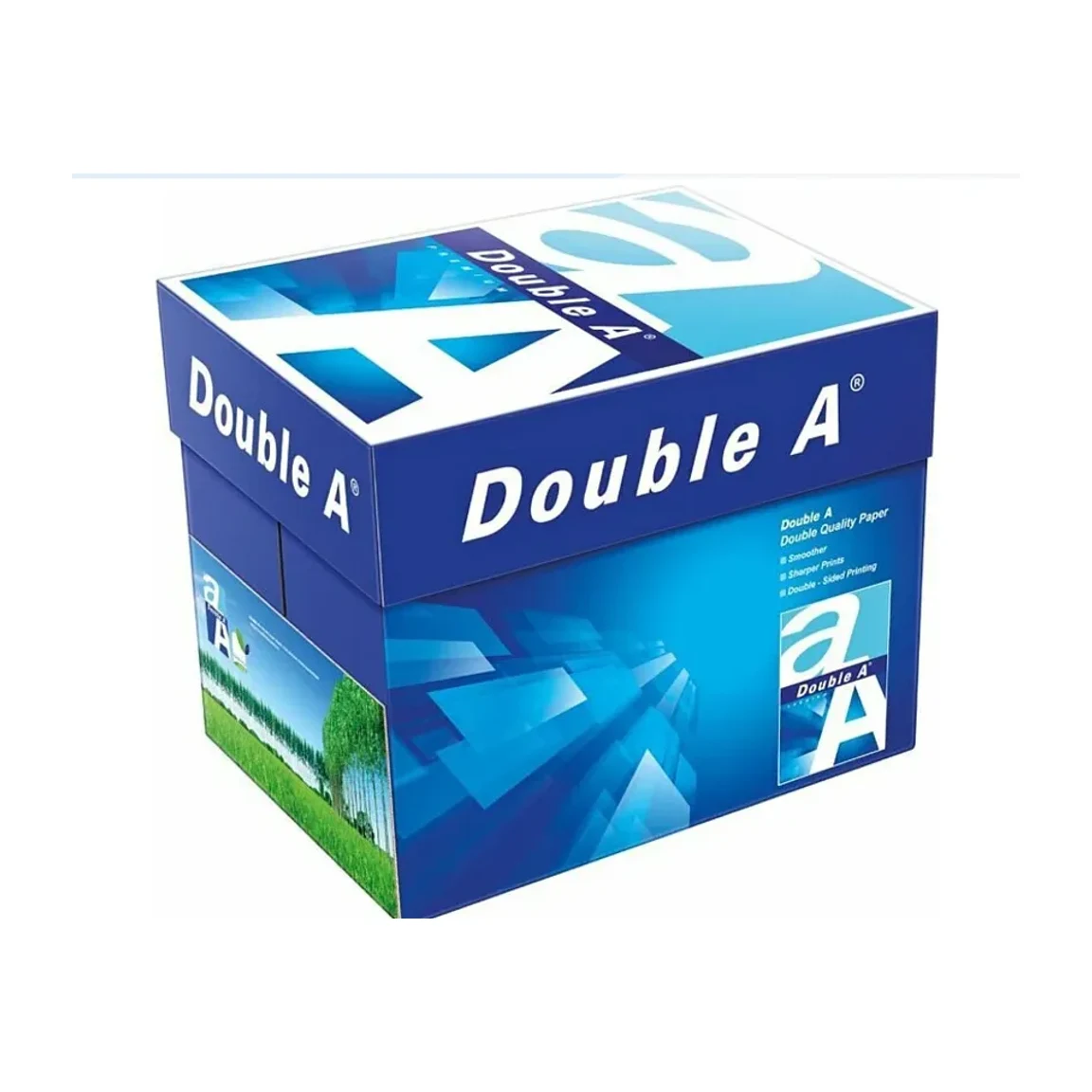
For most UAE offices, 80gsm is the right A4 copy paper specification: opacity typically runs 92-95%, which stops double-sided text showing through, and the stiffer sheet feeds more reliably than 70gsm in air-conditioned buildings. Cartons normally hold five reams, or 2,500 sheets, but read reams per carton off the quote, then compare suppliers in fils per sheet rather than per box.
Key takeaways
- An 80gsm A4 sheet weighs almost exactly 5 grams, so a 500-sheet ream is 2.5 kg and a five-ream carton is about 12.5 kg net.
- Cut-size A4 copy paper is normally packed five reams, or 2,500 sheets, to a carton, but reams per carton is a quoted figure, not a standard: read it off the quote before comparing.
- Opacity below roughly 92% produces visible show-through on double-sided printing, and Arabic-English documents reveal it first because Arabic text carries more ink per line.
- CIE whiteness readings near 170 come from optical brightening agents, which weaken with age and suit long-retention records poorly.
- Mono toner yields are rated under ISO/IEC 19752 at 5% page coverage, so the real cost per printed page in a working office runs above the rated figure.
- Copy paper stored on a bare concrete floor beside a loading bay through a UAE summer develops wavy edges that jam the duplex path.
On this page
- What gsm actually changes inside your printer
- Brightness, CIE whiteness and opacity: the numbers that decide duplex
- Reams, boxes and pallets: the units your quote is priced in
- What a UAE summer does to a pallet of paper
- Cost per sheet is not cost per printed page
- Matching the spec to the job
- Seven checks before you send the order
- Send the spec and get it priced
Most UAE offices reorder A4 copy paper on autopilot: same brand, same 80gsm, same box count, until the shared MFP jams twice in a week or finance asks why the stationery line moved. Three numbers on the ream wrapper settle the specification. One habit in the store room decides whether it survives August.
What gsm actually changes inside your printer
Gsm is grams per square metre. An A4 sheet is a sixteenth of a square metre, so an 80gsm sheet weighs almost exactly 5 grams: a 500-sheet ream is 2.5 kg, a five-ream box about 12.5 kg net. Twenty boxes is a quarter of a tonne arriving at a Business Bay tower with a booked goods lift.
The difference between 70, 75 and 80gsm is stiffness, not weight. Caliper runs roughly 90-100 microns at 70gsm and 100-110 microns at 80gsm, and stiffness climbs faster than thickness. Pick rollers and separation pads on mid-volume mono MFPs are set up around 80gsm cut-size stock; feed them lighter paper and you collect double-feeds, skew into the duplex path and curl off the fuser, since less fibre holds the sheet flat once heat has driven the moisture out.
Light stock still has a job: high-volume, single-sided, short-life print. Picking lists, delivery notes, gate passes, the signed proof of delivery. Standardising a whole fleet on 70gsm to protect one budget line is the wrong trade: the saving shows up in stationery and the cost shows up in service calls.
Few buyers notice the arrow or print-side mark on the wrapper. Sheets leave the cutter with a slight natural bow, and loading the marked face toward the print engine cuts curl on simplex runs.
Per-box pricing and volume tiers sit on the paper and printing stock category, and the office supplies range shows what else can ride on the same delivery.
Brightness, CIE whiteness and opacity: the numbers that decide duplex
Buyers read the first two figures as the same thing. ISO brightness (ISO 2470) measures blue-light reflectance at 457 nm and lands in the 90s or a little above on office paper. CIE whiteness (ISO 11475) measures across the visible spectrum under D65 daylight and typically reads 145 to 170. High CIE numbers come from optical brightening agents, which absorb ultraviolet and re-emit it as visible blue.
Two consequences nobody raises at the point of sale. Brightener-heavy paper looks brilliant under cool LED panels and duller under warm reception lighting, so the letterhead handed to a visitor is not the sheet you approved at your desk. Brighteners also weaken with age: a contract printed on a 168 CIE sheet will not look the same in five years. The Federal Tax Authority requires tax records to be kept for at least five years from the end of the relevant tax period, and corporate tax records for longer, so check the current rule on tax.gov.ae, then specify a low-brightener sheet for the file room.
Opacity (ISO 2471) decides whether duplex is usable at all. Standard 80gsm office paper is normally quoted at 92-95%; 70gsm sits nearer 88-91%. Below roughly 92%, show-through appears on dense pages: financial tables, dark charts, bilingual documents first of all. Arabic body text puts more ink on the line than Latin text at the same point size, so an Arabic-English contract printed duplex on thin stock ghosts long before an English-only memo does, and most UAE contracts and HR letters go out in both languages. Ask for the opacity number outright. A supplier who cannot produce one is quoting a price, not a specification.
Reams, boxes and pallets: the units your quote is priced in
A ream is 500 sheets. Cut-size A4 is normally boxed five reams to a carton, 2,500 sheets, but that is a convention, not a rule: some quotes are priced per ream, some per carton, and North American-style cases run ten reams, 5,000 sheets. That is why one quote can look half the price of another and be the same paper at the same rate per sheet.
A4 copy paper 80gsm in boxes of five reams carries a minimum order of five boxes: 25 reams, 12,500 sheets, roughly 62.5 kg. Read the meter instead of guessing: every laser MFP keeps a lifetime page count in its configuration report, so print it on the first of two consecutive months and subtract. Tiers cut the unit price as box count rises; the common error is four boxes a month all year when fewer, larger drops would clear a tier break. Paper does not expire; floor space is the constraint. How minimum order quantities and tier breaks work sets out that arithmetic for an annual plan.
Ask for box count per pallet on the proforma: a full pallet is around half a tonne on a footprint close to 1.2 by 1 metre, a point load a mezzanine or raised access floor may not be rated for.
What a UAE summer does to a pallet of paper
Paper is hygroscopic. It leaves the mill at roughly 4-6% moisture content and drifts toward the surrounding air, which shows up as two faults that look nothing alike. Wavy edges mean the edges took on moisture: a stockroom beside a loading bay in Al Quoz, Ras Al Khor or Mussafah in July, shutter open onto humid coastal air. Tight, curled edges mean the opposite, in a heavily air-conditioned office at low humidity. Wavy edges jam the duplex path; tight edges misfeed at the pick roller. The printer gets blamed for both.
Keep reams sealed until they go into the tray: the wrapper is a moisture barrier that stops working the second it is opened. Store cartons flat, off the concrete slab, away from external walls and out of the AC discharge. Give a delivery 24 to 48 hours in the room where it will be printed; a box that came off a 45°C truck into a 22°C print room will sweat.
Timing matters too. Between mid-June and mid-September the MOHRE midday break rule stops work in direct sun in the middle of the day, so a pallet needing kerbside offloading in Sharjah Industrial Area or Dubai Investments Park is a morning or late-afternoon job. Confirm the current dates with MOHRE each season.
If you are unsure what your store room can absorb, send your monthly volume and ask for the order to be split into scheduled drops. A line-item request through the RFQ form is priced by a person against tier breaks and delivery windows.
Cost per sheet is not cost per printed page
Cost per sheet is the box price divided by 2,500. Work it in fils and carry three decimals, because the gap between two quotes lives in that third decimal. One fils a sheet across a 12,500-sheet order is AED 125.
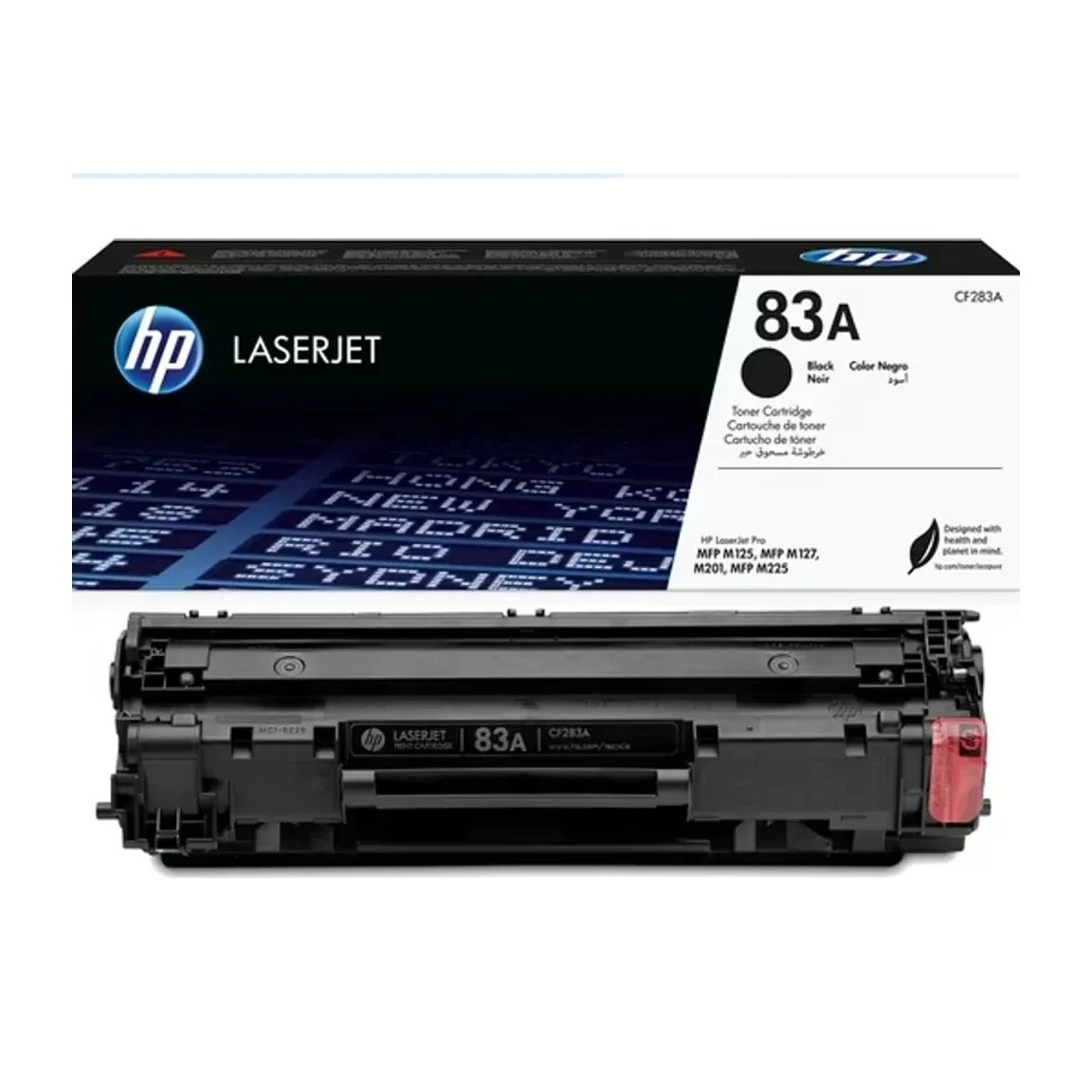
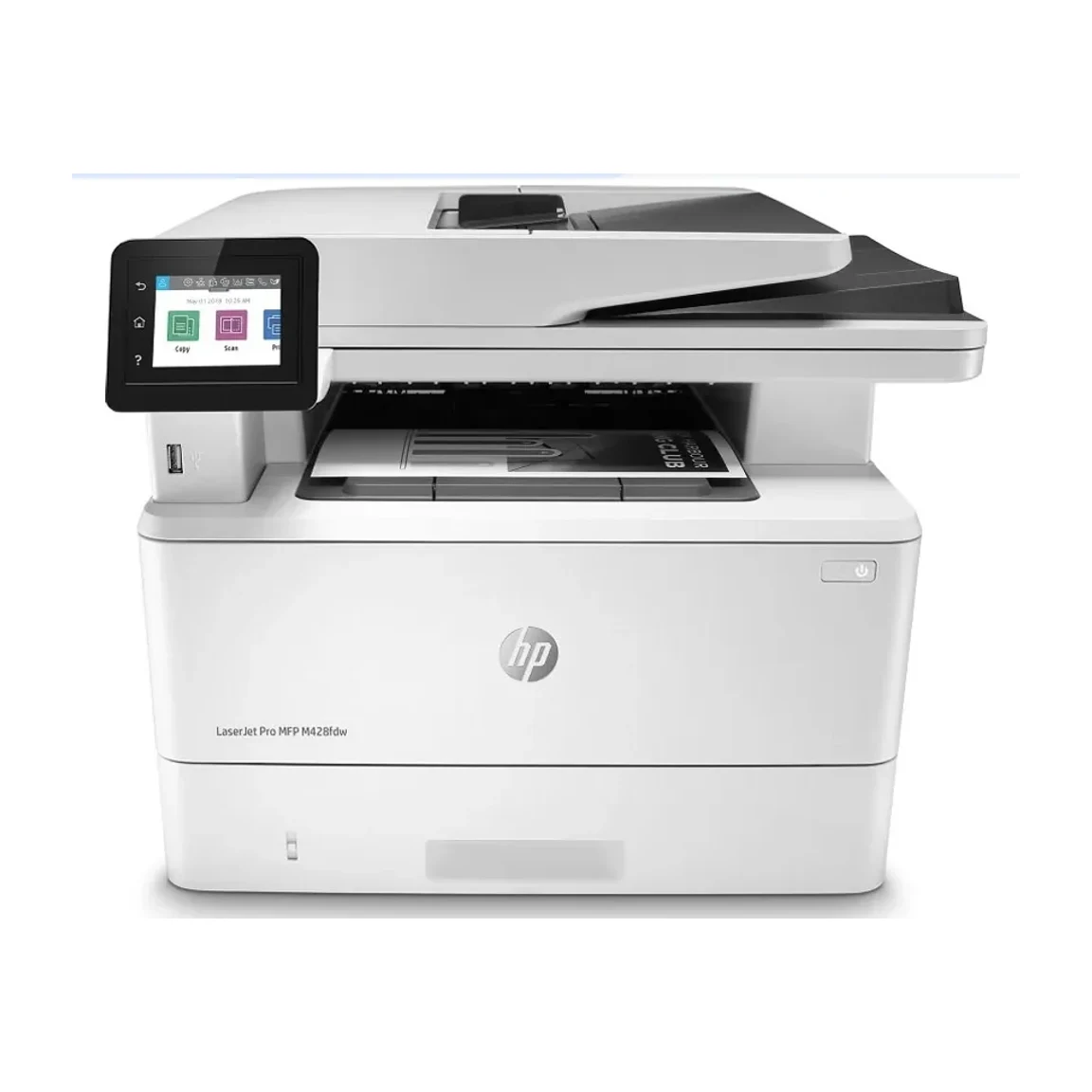
Cost per printed page is a different and much larger number, because toner dominates it. Rated yields are measured under ISO/IEC 19752 at 5% page coverage: the HP 83A black LaserJet cartridge is rated at around 1,500 pages on that basis. Real documents run at heavier coverage — tables, letterheads, logos, solid-set Arabic — so treat a rated yield as a ceiling, not a plan. The reorder trap is model families: the 83A fits the M125, M127, M201 and M225 families, while the HP LaserJet Pro MFP M428fdw takes a completely different cartridge. Match cartridges to the model number on the machine's label, not the family name in somebody's memory. The ink and toner range lists compatibility per model, and the printers and scanners category shows which machines take which consumables before you commit a fleet.
Dusty low-grade stock also accelerates roller and drum wear, which surfaces as a service call rather than a stationery line, and manufacturers exclude damage caused by media outside the specification printed in the manual. Where office supply costs actually accumulate applies the same logic to other categories, and IT hardware procurement for UAE SMEs covers how the printer you choose fixes your per-page cost for years.
Matching the spec to the job
| Use case | Recommended gsm | Typical opacity | CIE whiteness guide | What to watch |
|---|---|---|---|---|
| Internal drafts, picking lists, single-sided | 70-75 gsm | 88-91% | CIE 145-150 | Keep out of duplex trays |
| Everyday shared MFP printing, mixed duplex | 80 gsm | 92-95% | CIE 150-161 | The default for a general fleet |
| Contracts, tenders, bilingual documents | 80-90 gsm | 94% and above | CIE 150-160, lower for signed originals | Opacity beats whiteness; keep brighteners down on anything retained |
| Presentation covers, certificates | 160-250 gsm card | Not applicable | Match the body stock shade | Bypass tray only |
| Archive and long-retention records | 80 gsm, low-brightener | 94% and above | Deliberately lower | Brighteners fade; specify without them |
A3 is 297 x 420 mm, exactly twice the area of A4, so an 80gsm A3 sheet weighs 10 grams and costs roughly double per sheet. The trap is the tray: most A4-class MFPs will not take A3 at all, and the machines that accept it by bypass alone run slower and jam more. If marked-up site drawings are weekly work, buy a machine with an A3 cassette.
Seven checks before you send the order
- Write the specification in full: size, gsm, sheets per ream, reams per carton, mill or brand. Two quotes are not comparable until that line matches.
- Convert both prices to fils per sheet and carry three decimals.
- If you print duplex, ask for the opacity figure. A supplier who cannot answer has answered.
- Check the MOQ and where the next tier break sits, then whether your ordering pattern leaves a tier unclaimed all year.
- Decide where 12,500 sheets will sit: off the floor, away from the external wall, out of the AC discharge.
- Confirm the delivery detail: emirate, building, floor, goods-lift booking, who signs, and the exact cash amount to have ready, since orders are settled cash on delivery.
- Confirm the paperwork: prices exclude VAT with 5% added separately, a proforma invoice comes before delivery, and the bilingual UAE tax invoice in AED showing the supplier's TRN follows once the order is paid and packed. CoHub resells under its own name, so that invoice comes from the company you ordered from.
Running that list against a new vendor is most of what vetting a UAE B2B supplier amounts to in practice.
Send the spec and get it priced
Send your paper specification and monthly volume through the request for quotation form: gsm, sheets per month, emirate, and where the stock will be stored. A sales expert reviews every order personally, applies the tier price and any discount the volume earns, and issues a proforma invoice before anything ships. You normally hear back the same working day. If it is quicker to show than to type, message the sales desk on WhatsApp with a photo of your ream wrapper.
Categories covered in this guide
Live wholesale pricing, minimum order quantities and volume tiers for every line discussed above.
Products mentioned in this guide
Current AED prices excluding VAT, with bulk tiers shown on each product page.
Frequently asked questions
Is 70gsm A4 paper worth buying to save money?
Yes, for single-sided, short-life printing: picking lists, delivery notes, internal drafts read once and discarded. It costs less per sheet and does that job well. Keep it off shared duplex machines, because opacity near 88-91% lets text show through, and the thinner sheet curls more off the fuser, which raises jam frequency on busy trays.
How many sheets are in a box of A4 paper in the UAE?
A standard carton of cut-size A4 sold in the UAE holds five reams of 500 sheets, so 2,500 sheets per box. Some suppliers quote per ream and some price cases of ten reams, 5,000 sheets, which is why two quotes can look far apart while the price per sheet is nearly identical. Confirm reams per carton on the quotation, then divide the box price by the sheet count before comparing.
What does CIE whiteness mean on a ream wrapper?
CIE whiteness (ISO 11475) measures reflectance across the visible spectrum under D65 daylight and typically reads 145 to 170 on office paper. The high numbers come from optical brightening agents that convert ultraviolet into visible blue. That paper looks bright under cool LED lighting and duller under warm light, and the effect weakens with age, so archived documents suit a moderate-whiteness sheet better.
Why does copy paper jam more during the UAE summer?
Paper takes on and loses moisture with the surrounding air. In a humid stockroom near a loading bay, sheet edges swell and go wavy, which jams the duplex path. In a heavily air-conditioned office, edges dry and curl, causing misfeeds at the pick roller. Keep reams sealed until use, store cartons off the concrete floor, and let deliveries acclimatise for 24 to 48 hours.
Does using third-party paper void a printer warranty?
No. Manufacturers generally do not void a printer warranty because you bought paper elsewhere. What they exclude is damage caused by media outside the specification printed in the machine's manual: wrong weight, wrong moisture behaviour, or stock not rated for laser fusing. Read the media page of the manual before standardising a lighter or heavier sheet across a whole fleet.
How is a bulk A4 paper order paid for and invoiced in the UAE?
You place the order or send an RFQ, a sales expert reviews and prices it, and a proforma invoice is issued. Payment is cash on delivery across the seven emirates. Once the order is paid and packed, CoHub issues a bilingual UAE tax invoice in AED showing 5% VAT and the TRN. Storefront prices are quoted excluding VAT, with VAT shown separately.
CoHub Procurement Desk
CoHub is a Dubai-based B2B supplier operating under a UAE General Trading licence. Our sourcing and sales specialists price and dispatch business supply orders across all seven emirates, and they write these guides from what they see in real orders — not from a keyword list.
More about CoHub