
Specifying Packaging Supplies That Survive a UAE Summer
The short answer
Packaging supplies for UAE distribution should be specified by failure mode rather than unit price. Warehouses in Jebel Ali, Dubai Investments Park and Mussafah need corrugated rated by Edge Crush Test rather than ply count, tape whose adhesive suits the cargo temperature inside a parked van, stretch film measured by containment force, and thermal transfer labels that stay scannable in heat and dust.
Key takeaways
- The fibreboard trade's working rule is that corrugated loses roughly half its compression strength as relative humidity rises from about 50% to about 90%, which matters in unconditioned UAE warehouses in August.
- Edge Crush Test (ECT) predicts stacking strength while the Mullen burst test predicts puncture resistance, and the two ratings are not interchangeable.
- Hot melt carton tape loses shear holding power above roughly 50C, while cargo surfaces inside a van parked in Dubai in July routinely exceed 60C.
- A 40x30x30cm carton bills as 7.2kg on a courier volumetric divisor of 5000, even when the goods inside weigh 3kg.
- Stretch film performance is set by containment force measured with a spring pull-gauge, not by the number of wraps applied.
- Direct thermal labels darken in heat and can stop scanning, so thermal transfer printing with a resin ribbon suits outdoor UAE staging areas.
On this page
- Board grade and flute decide what the box survives
- Size against dimensional weight before you buy void fill
- Tape fails at the adhesive, not the film
- Stretch film is sold by the roll and used as containment force
- Labels that survive a Mussafah yard in July
- Estimating consumption and holding stock through a UAE summer
- Send the line-item list and we will price it
Packaging failures are rarely found in your own warehouse. They surface at a receiving dock in Fujairah, on a courier damage report, or in a customer's photograph of a crushed corner. Buying packaging supplies in Dubai on unit price alone is how an operation pays twice for one shipment.
Board grade and flute decide what the box survives
Flute is the easy part: E at roughly 1.5mm prints cleanly, C at about 4mm gives the most stacking strength per dirham, BC double wall at around 7mm carries heavy or export loads.
Edge Crush Test (ECT) predicts what a stack carries and the Mullen burst test predicts puncture, and neither substitutes for the other. Racked three tiers high, you need ECT. Thrown into a pickup in Ras Al Khor, you need burst.
I would not accept a quotation that says "3-ply" and stops there: ply count is the number of glued sheets, not the weight a box holds. Ask for the Box Maker's Certificate printed on the bottom flap; a blank flap means you are buying board on appearance.
Corrugated drinks the air around it. The trade's rule of thumb is that a box loses around half its compression strength as relative humidity climbs from roughly 50% to roughly 90%, and August nights on this coast hold above 80% for hours. A carton inspected in an air-conditioned room in Sharjah Industrial Area can bulge on tier three of an unconditioned Jebel Ali rack by September, so one ECT grade up costs less than a damage claim.
Tier breaks sit on every page of the corrugated boxes and cartons range, and the packaging and shipping catalogue is where to start when consolidating suppliers.
Size against dimensional weight before you buy void fill
Couriers bill the greater of actual and volumetric weight. Express services in the UAE commonly divide cubic centimetres by 5000, road operations 6000, and some intra-emirate services price per pallet position. A 40x30x30cm carton is 36,000 cm3, so it bills at 7.2kg on a 5000 divisor even when the goods weigh 3kg. Drop the height to 20cm and it bills at 4.8kg.
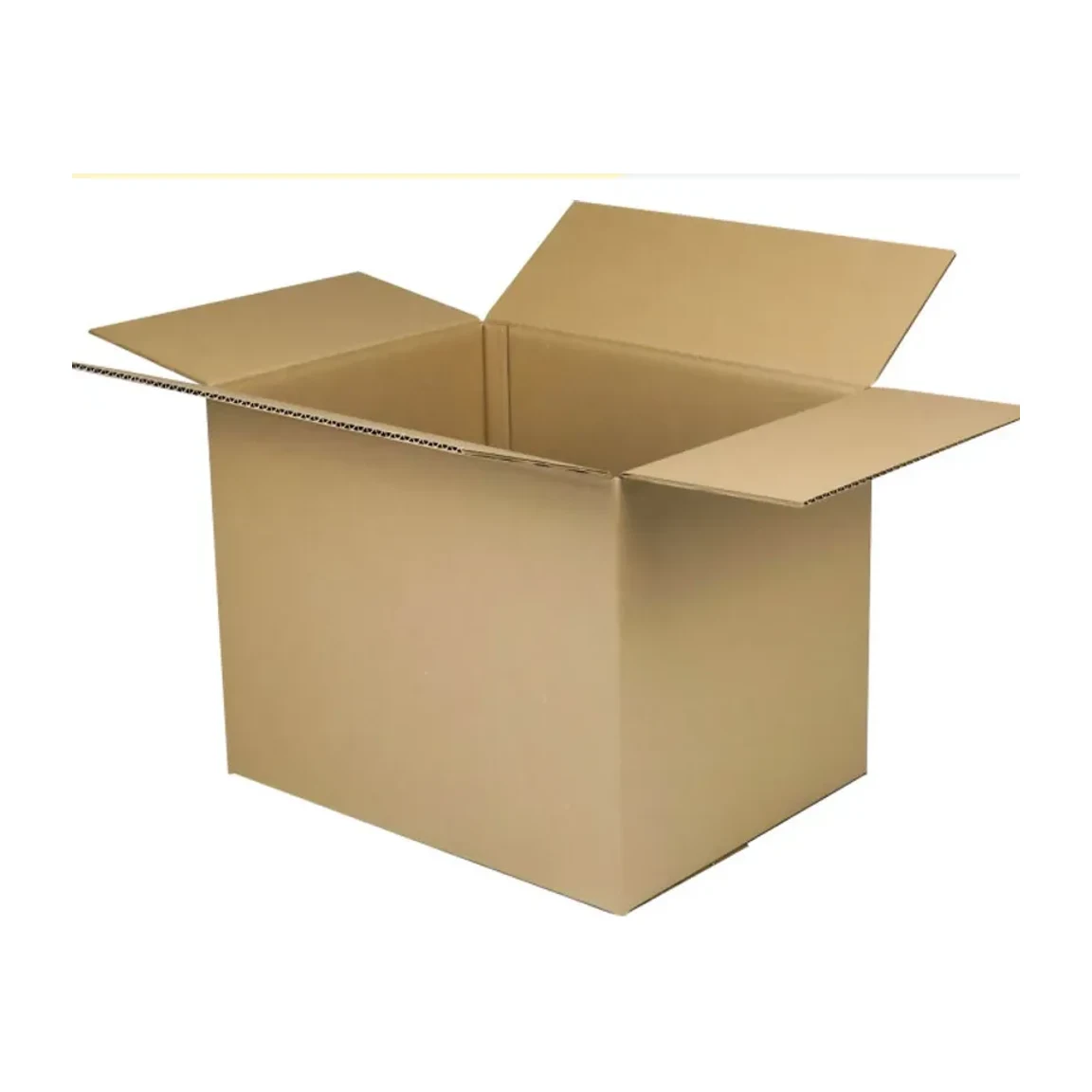
Which is why 40x30x30cm shipping cartons in 50-piece packs belong inside a three-size range, not the one box for everything. A fourth size sounds clever and ends up dead stock.
Void fill has a local trap: air pillows sealed at 22C in a conditioned pack hall ride at 55C or higher inside a closed van, gaining roughly a tenth of their absolute pressure on the way, so underfill them deliberately. Boards, drives and RAM need anti-static bags from the protective packaging range. Keep the original retail carton through the return window: dealer exchanges and distributor RMAs are commonly refused without it. The IT hardware procurement guide for UAE SMEs sets out what else to confirm.
Tape fails at the adhesive, not the film
| Adhesive | Behaviour in heat | Best use | Watch for |
|---|---|---|---|
| Hot melt (synthetic rubber) | Shear drops above roughly 50C | Case sealers, dusty recycled liner | Edge ooze in hot storage |
| Water-based acrylic | Wider working band, resists UV | Cartons stored for months | Tails flagging at cheap grades |
| Solvent acrylic | Better than most hot melts | Vans with no chilled cargo area | Cost, thinner local supply |
A closed panel van parked in Al Quoz runs far hotter than ambient; cargo surfaces above 60C are ordinary in July. So measure the inside of your own van before you specify a tape.
Ask for three numbers. Total caliper and adhesive coat weight in g/m2, not film micron alone, because 45 micron with a thin coat fails where 40 micron with a heavy coat holds. The adhesive's softening point in writing, so your floor sits above the temperature you measured. Then verified length: rolls declared at 100m that measure 75m are the quietest loss in this market.
One upgrade earns its money on cash-on-delivery work: tamper-evident or printed tape. "The box was already open" is not an argument you win with plain clear film.
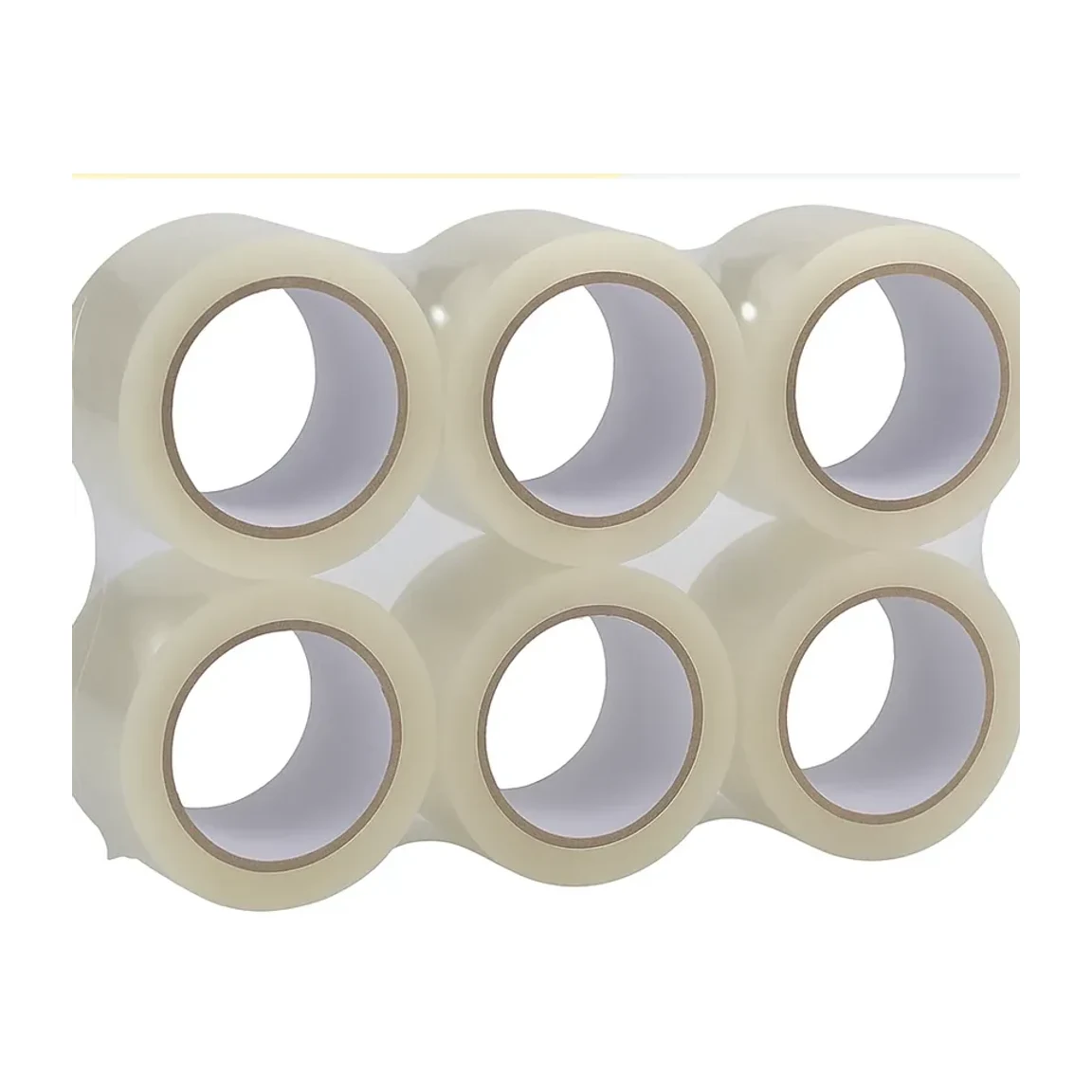
A centre strip top and bottom on a 40x30x30cm carton uses about a metre of 48mm tape; a full H-seal, adding a strip across each end of both faces, runs closer to three, so check which pattern any cartons-per-roll figure assumes. If you are unsure which tape you run, send a photo of the core label with your monthly carton count and ask the sales desk to check it against a 36-roll case of 48mm x 100m clear packing tape; every line in the packing tapes and adhesives range states width and length, and the desk confirms core diameter for your dispenser.
Stretch film is sold by the roll and used as containment force
For general palletising in UAE distribution, 20 to 23 micron covers most loads, by hand or by machine, and 12 to 17 micron only pays off on light, regular, low-value loads. Blown film costs more and is worth it only where sharp corners cut cast film, so ask which the batch is.
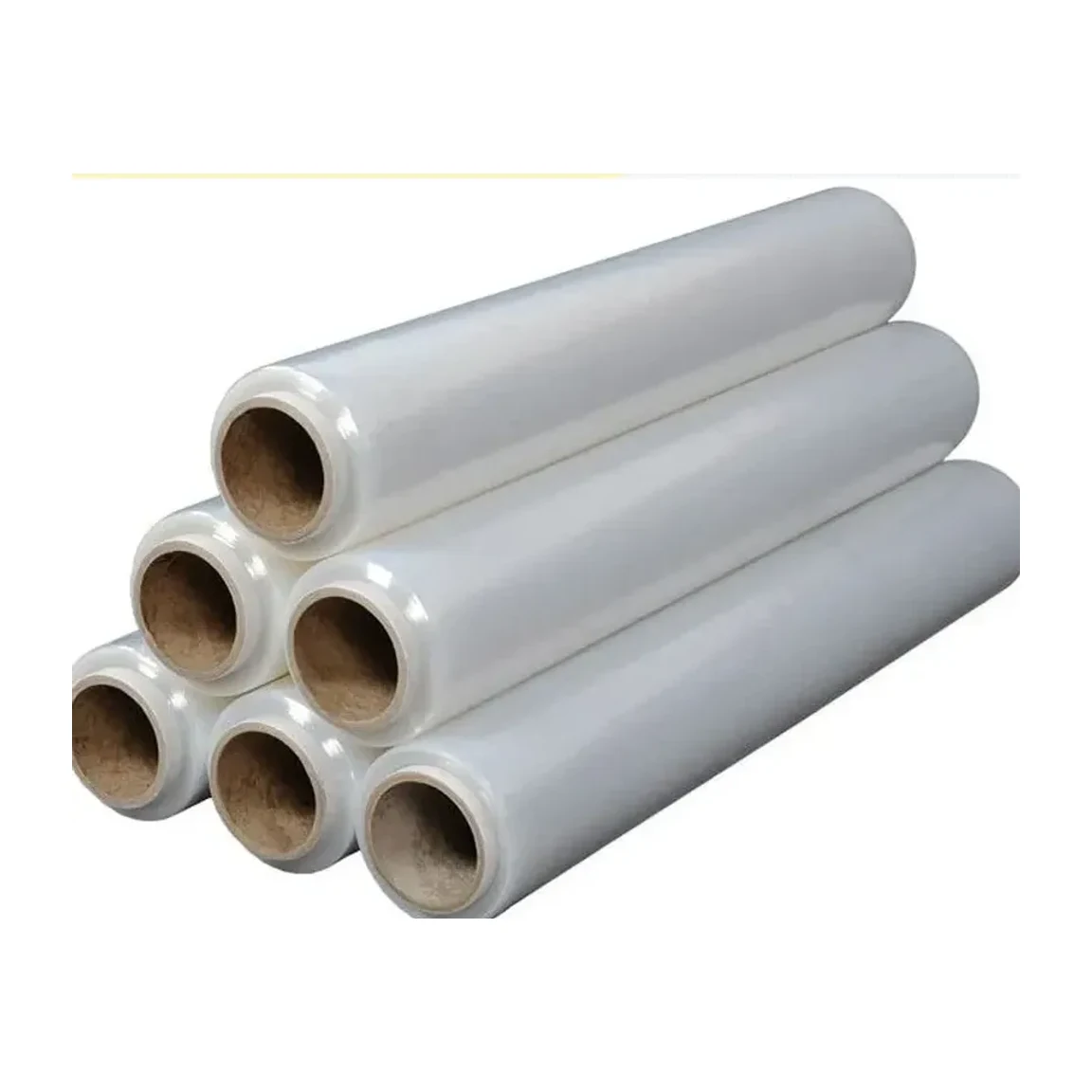
The number nobody volunteers is net film weight per roll. Film is sold by roll count and consumed by the kilo, and two cases both described as six rolls of 23 micron 50cm film can differ by nearly a kilo a roll, so ask for net weight in writing and weigh a roll on arrival. Our 23 micron 50cm pallet stretch film in 6-roll cases sits in the band most operations need; other gauges sit in the pallet wrap and stretch film category.
Value comes from how far the film stretches, not how much you unroll: machine film at 23 micron is typically pre-stretched 150% to 250% on a powered wrapper, while hand wrapping without a pre-stretch brake eats two to three times the film per pallet.
Stop counting turns. Containment force is the metric: read it with a spring pull-gauge at the top, middle and base of a finished pallet, set the wrapper to that reading, and tie the load to the deck boards with three or four base turns. Film creeps under load and heat accelerates it, so a pallet wrapped tight at 06:00 in a Ras Al Khor yard reads slacker by mid-afternoon. On the Dubai to Fujairah run the fix is corner boards and a strap, not six more turns.
For a wrapped pallet moving inside Dubai the same day, per-pallet same-day B2B delivery is arranged through licensed transport providers, subject to lane and cut-off, as are the wider logistics and delivery services. CoHub is merchant of record on the goods; the vehicle and the licence belong to the provider.
Labels that survive a Mussafah yard in July
Direct thermal paper prints because heat darkens the coating, so heat also destroys it: a label staged outdoors in Mussafah in July greys out until a scanner cannot read the bars. Thermal transfer lays down an image that is not heat-reactive, and the ribbon sets durability. Wax suits indoor paper labels, wax-resin mixed handling, full resin a synthetic facestock facing chemicals or wash-down.
Coated paper is fine on clean corrugate; polypropylene or polyester survives moisture, oil and scrubbing. Standard permanent acrylic gives up on dusty surfaces, so specify high-tack for anything staged outdoors. A carton pulled from chilled storage into 40C humidity wets in seconds, and a label applied to it lifts within the hour.
Barcode print quality is graded against ISO/IEC 15416 for linear symbols and ISO/IEC 15415 for 2D codes, and a verifier report turns a scan-failure rejection into evidence rather than argument. On pallets, put the SSCC licence plate on a GS1-128 label on two adjacent faces so a forklift driver reads it from either side.
Language is compliance, not design. Outer packs of cleaning chemicals and food sold in the UAE carry Arabic label content, conformity marking administered by the Ministry of Industry and Advanced Technology applies to specific categories, and Dubai Municipality sets its own requirements for others. That is the position as of 2026; confirm the current rule with the authority before a print run. I would not commit a year of pre-printed labels in one order: artwork rules change and adhesive ages on the roll. The checklist for commercial cleaning supplies sets out what a disinfectant label carries; blank stock and ribbons sit in labels and barcode supplies.
Estimating consumption and holding stock through a UAE summer
Estimate from throughput, not last year's purchase order. An operation shipping 400 parcels a day, Monday to Friday, moves roughly 8,600 a month; at about a metre of tape per single-strip-sealed carton that is around 86 rolls of 100m, or 2.4 cases of 36; H-seal everything and it triples. For film, weigh instead of guessing: wrap ten pallets, weigh the roll before and after, divide by ten. Then lay the calendar over it: Ramadan and Eid pull FMCG volume forward, late August brings school-term restocking, and converters run campaigns in those weeks.
My stockholding rule is deliberately lopsided: four to six weeks of tape and film, compact and stable out of the sun, and two weeks of cartons at most. Flat blanks eat mezzanine cube and take up moisture while they wait, so a large carton buy at a tier break gives back in strength what it saved in price. Keep them on pallets, never on the slab.
Run this before you sign off a specification.
- Calculate billable weight on your carrier's divisor for last month's five biggest shipments.
- Seal ten cartons with your current tape and leave them in a parked van, 10:00 to 16:00.
- Take a spring-gauge containment reading at three heights on a finished pallet and make it standard.
- Unroll one tape roll and weigh one film roll per delivery, and compare measured against declared.
- Scan every label type outdoors in direct sun at your customer's receiving distance.
- Convert monthly consumption into cases and order at the next tier break, not a reorder point, as the guide to MOQs and tiered pricing sets out.
- Write the outcome as a specification with grades, microns and part numbers. "Boxes, medium" is not one.
Send the line-item list and we will price it
Send the list the way you consume it: carton sizes and monthly quantities, tape width and length, film micron and roll count, label facestock and ribbon grade. Use the request for quotation form or message the sales desk on WhatsApp. A sales expert reviews every order, checks pack sizes and tier breaks against your consumption, and returns a proforma invoice, usually the same working day. Payment is cash on delivery. The bilingual UAE tax invoice showing 5% VAT and our TRN follows once the order is paid and packed.
Categories covered in this guide
Live wholesale pricing, minimum order quantities and volume tiers for every line discussed above.
Products mentioned in this guide
Current AED prices excluding VAT, with bulk tiers shown on each product page.
 Bulk pricing available
Corrugated Shipping Boxes 40x30x30cm — 50 pcs
excl. VAT
 Bulk pricing available
Packing Tape 48mm x 100m Clear — 36 Rolls
excl. VAT
 Bulk pricing available
Pallet Stretch Film 23μ 50cm — 6 Rolls
excl. VAT
 Services
Same-Day B2B Delivery — Dubai (per pallet)
excl. VAT
Frequently asked questions
What board grade should I specify for shipping boxes in the UAE?
Specify by Edge Crush Test rather than by ply count. C flute single wall at a suitable ECT handles most palletised shipping in the UAE, and BC double wall suits heavy or export loads. Because corrugated loses roughly half its compression strength as humidity rises from 50% to 90%, add a grade or drop a stack tier in an unconditioned warehouse over summer.
Which packing tape holds up in UAE summer heat?
Solvent acrylic, or a hot melt with a high softening point. Standard hot melt adhesive loses shear strength above roughly 50C, and cargo surfaces inside a van parked in Al Quoz exceed 60C in July. Test before you commit: seal ten cartons, leave them in a parked van from 10:00 to 16:00, and check whether the tape tails have lifted.
What micron stretch film do I need for pallets?
For general palletising in UAE distribution, 20 to 23 micron covers most loads by hand or by machine, and 12 to 17 micron only pays off on light, regular, low-value loads. Micron alone does not decide performance. Pre-stretch does: 23 micron cast machine film is typically pre-stretched 150% to 250% on a powered wrapper, so measure containment force with a spring gauge rather than counting wraps.
Why do my barcode labels stop scanning in summer?
Direct thermal labels print because heat darkens the coating, so heat also destroys them, and a label staged in a Mussafah yard in July can grey out until the barcode fails. Switch to thermal transfer printing with a wax-resin or full resin ribbon on synthetic facestock, and verify print quality to ISO/IEC 15416 before a customer rejects a delivery.
How do I estimate monthly packaging consumption?
Work from throughput. An operation shipping 400 parcels a day, Monday to Friday, moves roughly 8,600 a month; at one metre of tape per single-strip-sealed carton that is about 86 rolls of 100m. For stretch film, wrap ten pallets, weigh the roll before and after, and divide by ten rather than estimating from last year's order.
Can I pay by card or bank transfer for packaging supplies?
Payment on CoHub is cash on delivery today, so cards, transfers and credit terms are not offered. You place the order or send an RFQ, a sales expert prices it and issues a proforma invoice, goods are delivered, cash is collected at the door, and a UAE tax invoice showing 5% VAT and the TRN follows once the order is paid and packed.
CoHub Procurement Desk
CoHub is a Dubai-based B2B supplier operating under a UAE General Trading licence. Our sourcing and sales specialists price and dispatch business supply orders across all seven emirates, and they write these guides from what they see in real orders — not from a keyword list.
More about CoHub