
Buying PPE for UAE Worksites: A Safety Officer's Checklist
The short answer
PPE on UAE worksites is the employer's cost: under UAE labour law enforced by MOHRE, employers provide protective equipment free of charge. A compliant kit covers head, eyes, hands, feet and hi-vis, each carrying a legible EN or ANSI marking, sized to fit the worker, issued against a signed register, and replaced on a stated cycle rather than on failure.
Key takeaways
- Under UAE labour law as enforced by MOHRE, employers must provide personal protective equipment at no cost to the worker, and the duty extends to maintenance and replacement.
- As of 2026, the MOHRE midday break runs from 15 June to 15 September and stops open-air work in direct sunlight between 12:30 and 15:00, on dates confirmed each year.
- EN ISO 20471 Class 2 hi-vis requires 0.50 m² of fluorescent background material and 0.13 m² of retroreflective material, while Class 3 requires 0.80 m² and 0.20 m².
- Ventilated safety helmets are cooler in UAE summer conditions but cannot carry the EN 397 electrical-insulation marking for 440 V a.c., so electricians need non-vented shells.
- In EN 388:2016 the coup-test cut level (1 to 5) and the ISO 13997 TDM letter (A to F) sit side by side on the pictogram. Where the blade blunts during testing the numeric level is voided and marked X, and the letter is the figure that governs, which is why cut-resistant gloves are specified by letter.
- A UAE HSE audit typically calls for a signed per-worker issue register and conformity documents for the batch actually issued. Payroll evidence that the PPE cost the worker nothing belongs with a MOHRE inspection rather than the safety file.
On this page
Most UAE safety officers do not fail an audit on the equipment. They fail on the file behind it, on sizes nobody can wear, and on a replacement cycle that lives in a spreadsheet and nowhere in the store. Choosing a PPE supplier in the UAE is a compliance decision before it is a price decision, and the cheapest carton on a quote usually arrives in one size.
Who pays, and who will ask
Under UAE labour law as enforced by the Ministry of Human Resources and Emiratisation (MOHRE), the employer supplies personal protective equipment and pays for it; nothing comes off the worker's wage. The duty runs past handover: kit has to be used, kept serviceable, and pulled from service the moment it stops protecting.
Abu Dhabi sites also sit under OSHAD, whose Codes of Practice cover PPE and working in heat, applied through your sector regulator. Dubai Municipality sets site requirements in Dubai; Dubai Civil Defence covers emergency provision. The product is regulated separately from the way you use it: PPE placed on the UAE market falls under the conformity-assessment regime of the Ministry of Industry and Advanced Technology, which absorbed ESMA. As of 2026, check the current wording before pasting a clause into a tender.
The line most HSE files miss is a payroll line. "Provided free of charge" is a finance control as much as a safety one: a salary deduction for a lost helmet contradicts your own HSE manual, and a MOHRE inspector reads that contradiction straight off the two files.
If you are shaping a budget line rather than a purchase order, the full safety and PPE range shows tiered carton pricing, exclusive of the 5% VAT that is added separately — enough to sanity-check a figure before it reaches finance.
Read the marking before you read the price
Serious PPE carries its standard on the item, not just the outer carton. Five markings carry most of the argument.
| Category | Marking | What it tells you | Common UAE spec error |
|---|---|---|---|
| Head | EN 397 or ANSI/ISEA Z89.1 | EN 397: impact from above, plus optional MM, LD and 440 V a.c.; Z89.1: Type I/II impact, Class G/E/C | Vented shells issued to electricians |
| Eyes | EN 166 on frame and lens | Frame: impact letter S, F, B or A. Lens: optical class, K for scratch, N for anti-fog | An F-rated lens in an unrated frame |
| Hands | EN 388:2016; EN ISO 374-1 Type A, B or C | Abrasion, cut, tear, puncture, TDM cut A to F, chemicals tested | Letter codes never checked against the safety data sheet |
| Feet | EN ISO 20345 S-code, HRO outsole | Toe cap, penetration resistance, antistatic, energy absorption | SRA/SRB/SRC copied into a tender written after the 2022 revision |
| Hi-vis | EN ISO 20471 Class 1, 2 or 3 | Measured area of fluorescent and retroreflective material | Class picked as a colour preference |
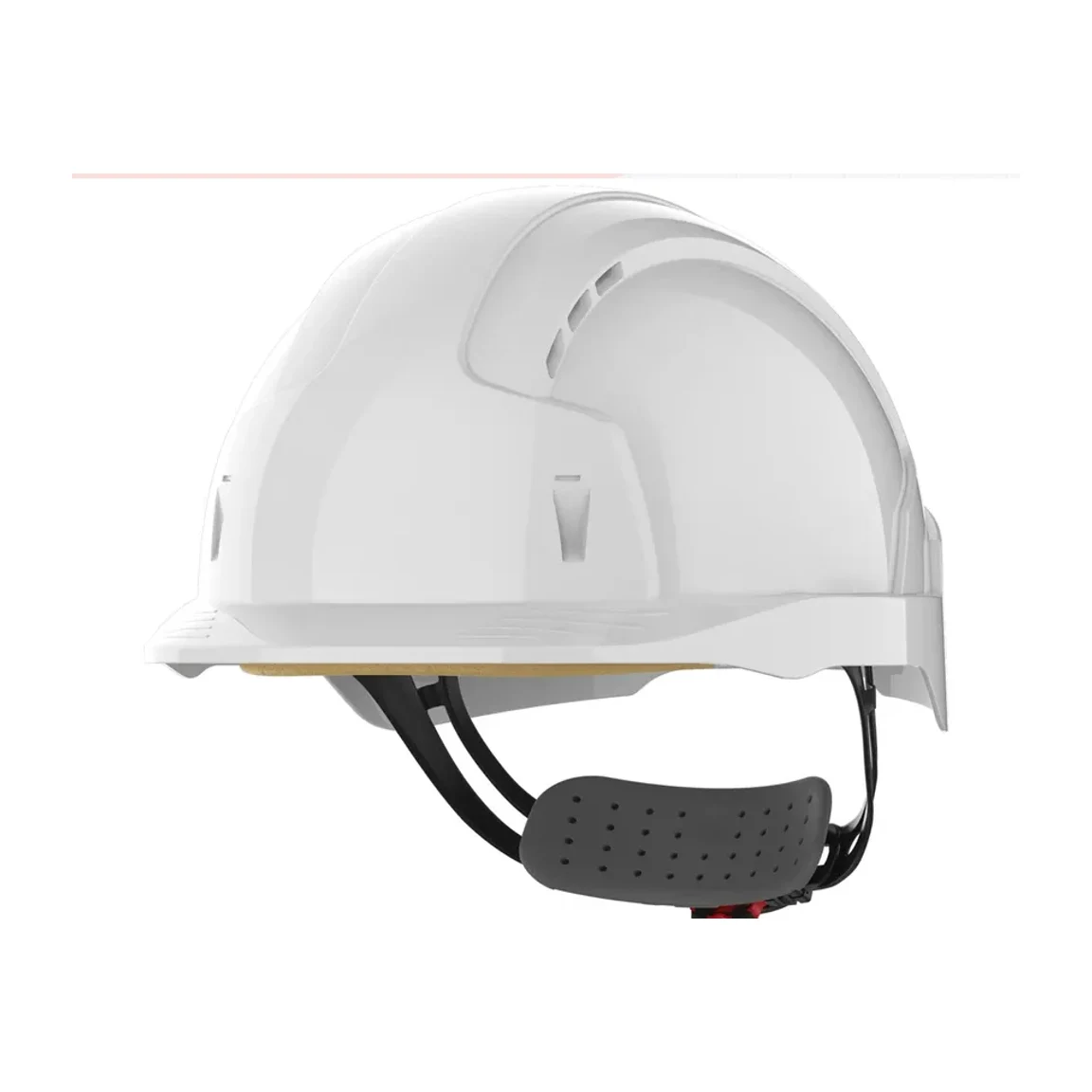
Ventilated safety helmets run cooler in a Ras Al Khor yard in August, and a cool helmet stays on the head instead of hanging off a scaffold tube. Those same vents disqualify the shell from the 440 V a.c. insulation marking under EN 397, so hold non-vented stock for electricians and write the split into the specification. A shell gone chalky under UV is finished, whatever the moulded date clock under the peak says. Buy from the head protection range by trade, not by headcount.
Eye protection fails here for reasons unrelated to impact rating. A worker steps from a 22°C site office into 45°C and heavy humidity, the lens fogs in seconds, and the glasses end up on top of the helmet. Specify the N anti-fog symbol and an EN 172 sunglare filter outdoors, plus a clear spare for dusk — all in the eye, face and respiratory protection category, beside the EN 149 FFP masks that only work when the face seal does.
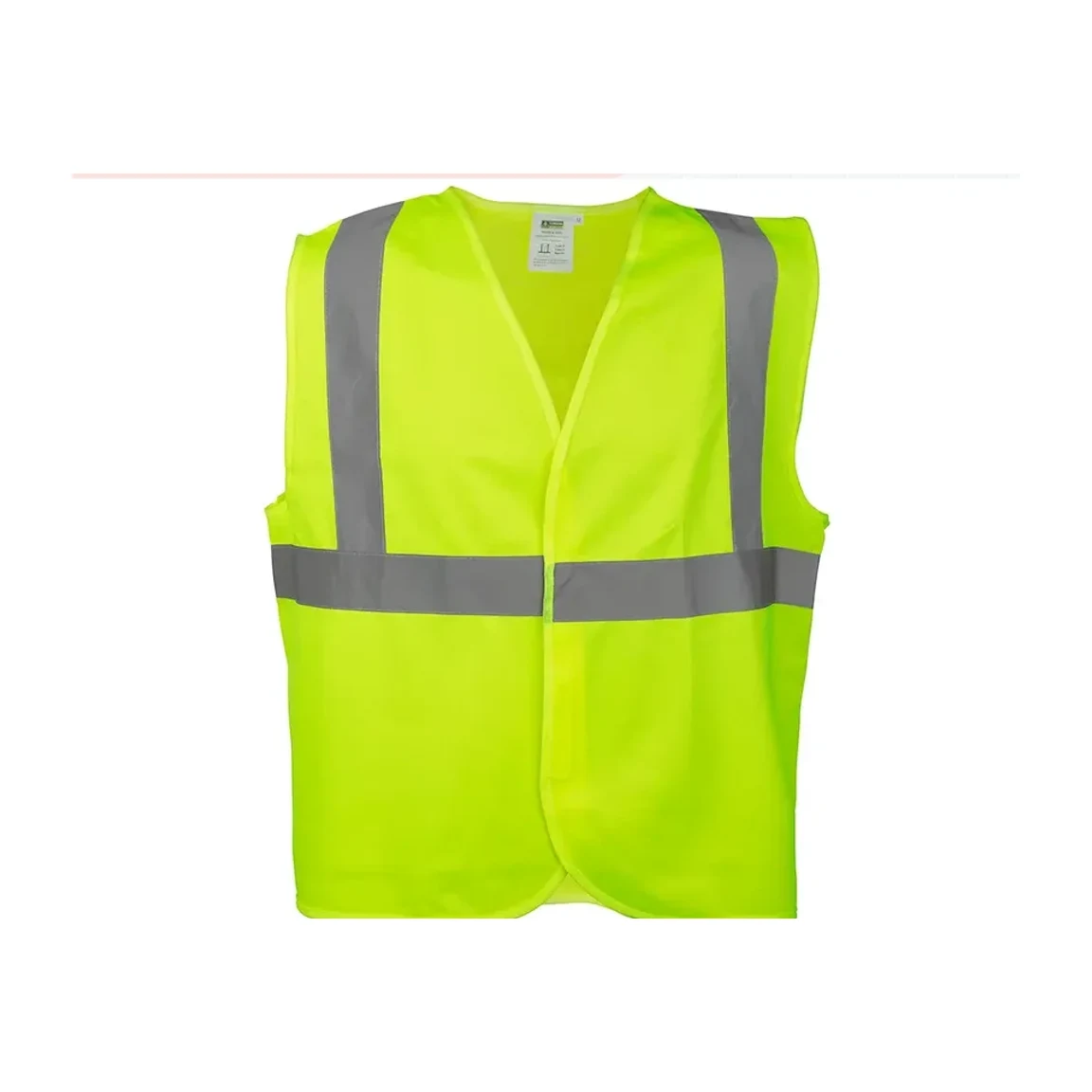
Hi-vis is measured, not judged by eye. EN ISO 20471 Class 2 requires 0.50 m² of fluorescent background material and 0.13 m² of retroreflective material; Class 3 raises those to 0.80 m² and 0.20 m², which in practice means sleeves. A Class 2 safety vest suits a daylight yard with controlled vehicle movement. A night shift beside live traffic on a Mussafah access road is a Class 3 conversation, and no cost argument changes the geometry of a headlight beam. Do not compare hi-vis workwear on class alone: ask for fabric weight in gsm and the wash-cycle count. A vest rated for 25 washes and one rated for 5 are not the same purchase.
Summer rewrites the specification
As of 2026 the MOHRE midday break runs 15 June to 15 September and stops open-air work in direct sunlight between 12:30 and 15:00, on dates confirmed each year. It does not remove the heat problem; it pushes work into a 05:30 start and a hard afternoon push, the hours when humidity, dew and dust do most of the damage to lenses and filters.
- Helmet sweatbands are consumables, not spares. Order them as their own line and swap them monthly; a helmet binned because the harness smells is a helmet you bought twice.
- Coated gloves hold sweat. Issue two pairs per worker so one dries overnight — a wet glove comes off, and a glove that is off protects nobody.
- First aid kits cook. A box in an uncooled container reaches temperatures that ruin plaster adhesive, so keep first aid and fire equipment in the cooled office and check expiry quarterly.
- Buy summer consumables in May. Sweatbands, anti-fog wipes and hydration supplies all move at once in June, when lead times stretch.
Gloves, and sizing a multinational crew
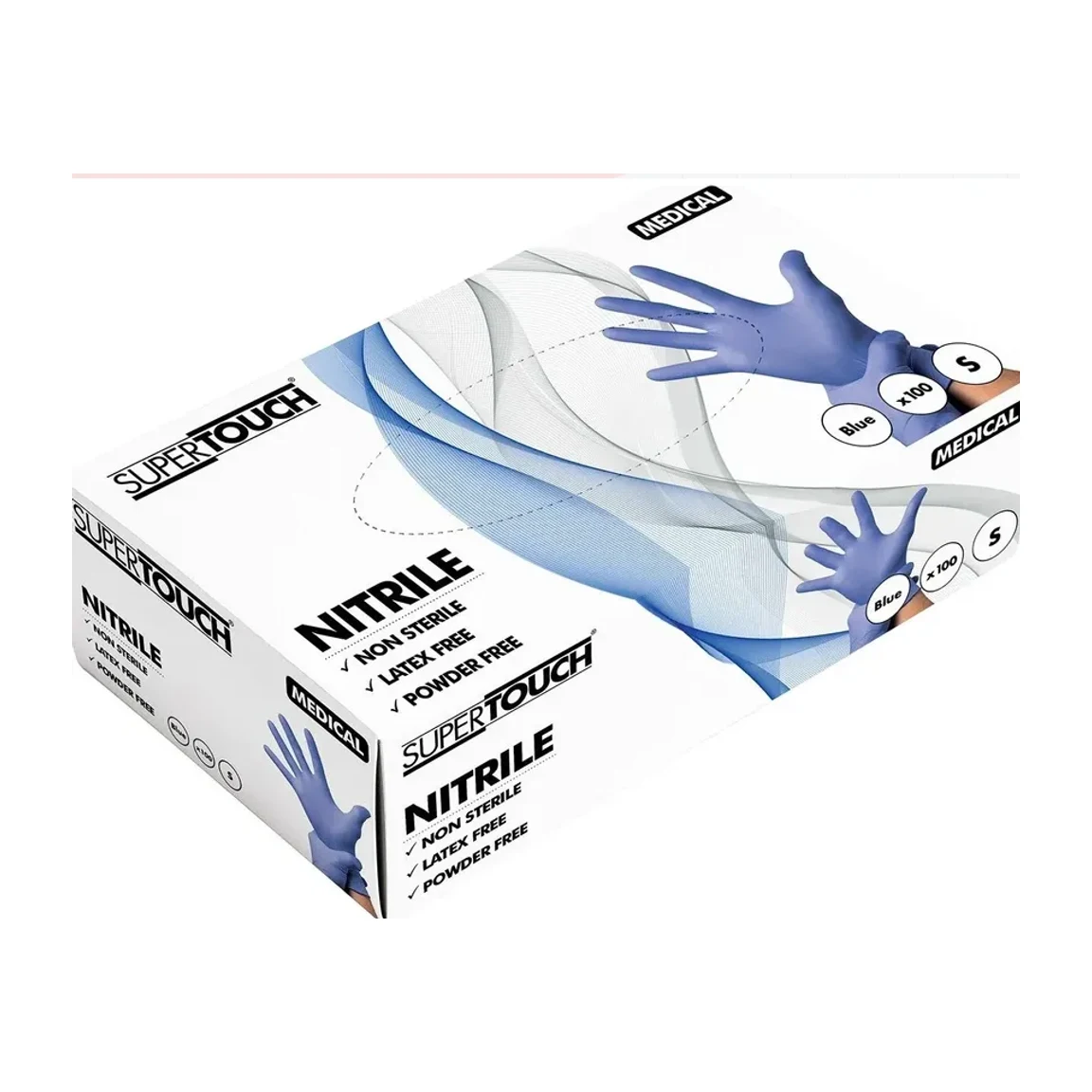
Gloves are the highest-volume line on almost every UAE site, and the one most often re-ordered from habit. Disposable nitrile is a barrier, not a mechanical glove: powder-free nitrile glove cartons suit short chemical contact, food handling and inspection, and puncture resistance is low by design. Thickness drives cost per use far more than price per box; the box that wins on unit price is usually the box changed three times a shift, and it costs more per worker-day than a thicker glove changed once. Coated gloves, nylon liner with a PU or nitrile palm, carry the civil and MEP trades. Cut-resistant gloves at EN 388 letter grade C or above belong wherever blades, glazing or steel strapping appear, usually the Jebel Ali warehouse, not the site; the packaging materials guide covers the box knives and strapping tensioners behind those injuries. For cleaning crews, match EN ISO 374 letter codes to the disinfectant in the cupboard, not to the word "chemical" on a requisition; the cleaning supplies checklist handles labelling and storage.
One hard rule: no EN 388 test report for the batch offered, no order. Letter grades cost nothing to print on a cuff.
Then size it. Sizes on a UAE site run 6 to 11 — the crew comes from South Asia, the Philippines, Egypt, East Africa and Europe — and ordering "large" for everybody buys unworn stock and bare hands on the scaffold.
- Run a size survey at induction and file it with the issue register.
- Specify coveralls by chest measurement in centimetres; letter sizing differs between European and Asian lines.
- Size boots at the end of a shift, never the start. Feet swell in the heat, and a boot that fits at 06:00 is a blister by 15:00.
- Tight-fitting respirators do not seal over facial hair. Where beards are worn, the honest control is a loose-fitting powered hood, not a higher FFP class and a signature.
Ask whether a carton ships single-size or size-split before the order leaves your desk. Send your headcount by size and the sales desk will check pack composition against live stock across the hand protection range — the question that keeps half a delivery out of dead stock.
Per-role kits and a replacement cycle you can defend
| Role | Core issue | Task add-ons | Reissue trigger |
|---|---|---|---|
| Civil labourer | EN 397 helmet, Class 2 vest, S3 boots, coated gloves, EN 166 glasses | Ear defenders, FFP mask, harness at height | Gloves monthly; vest when the tape cracks |
| Electrician | Non-vented 440 V helmet, arc-rated eye protection, S3 boots | Insulating gloves, face shield | Insulating gloves at the mandated interval |
| Warehouse operative | Class 2 vest, S1P, S1PL or S1PS boots, cut-resistant gloves | Bump cap, knee pads | Cut gloves when one strand shows |
| Cleaning and facilities | EN ISO 374 gloves, splash goggles, slip-rated footwear | Respirator for enclosed-space chemicals | Chemical gloves per shift, or on any breach |
| Welder | Welding helmet, EN 407 gloves, FR coverall, HRO outsole | Leathers, local extraction | Coverall on burn-through |
Run this before you release the order:
- Pull the hazard list per role from the current risk assessment, not last year's order.
- Write the standard and the class into the line item, not only the product name.
- Ask which edition the marking refers to; EN 388:2016 and EN ISO 20345:2022 both changed the codes.
- Request the manufacturer's leaflet and conformity documents for the batch you are buying.
- Convert headcount into pack multiples, check the minimum order quantity, confirm each line ships split by size.
- Set a reissue trigger per item: a date, a wash count, or one named visible failure.
- Order vests and gloves above headcount. Both are lost, borrowed and taken home.
What an HSE auditor actually asks to see
- A signed issue register per worker: name, employee number, item, size, date and signature, in English and Arabic.
- Evidence the worker paid nothing, which in practice means a clean payroll record.
- Conformity and test documents for the item actually issued, not a similar model.
- A toolbox-talk record on correct use and limits, plus inspection records where an interval is mandated — harnesses and insulating gloves first.
- A disposal record showing damaged equipment left service instead of returning to the shelf.
The document nobody keeps is the manufacturer's leaflet inside the box. Keep it — auditors ask for it, and nothing else proves what the marking means. CoHub buys from vetted vendors and supplies under its own name as merchant of record, so the paperwork for a mixed pallet comes back through one supplier rather than five. Ask the sales desk which documents are available per line before you order. The supplier selection guide covers the rest of the checks.
Send the sales desk your site list
Roles, headcount, sizes and any binding standard — that is the whole list. Send it through the request for quotation form or on WhatsApp. A sales expert reviews every order, prices it against the volume tiers, checks pack sizes and size splits against live stock, and comes back with a proforma invoice. Delivery reaches all seven emirates, same-week as a rule, with same-day available in Dubai on stocked lines. Payment is cash on delivery, and your UAE tax invoice follows once the order is paid and packed.
Categories covered in this guide
Live wholesale pricing, minimum order quantities and volume tiers for every line discussed above.
Products mentioned in this guide
Current AED prices excluding VAT, with bulk tiers shown on each product page.
Frequently asked questions
Who pays for PPE in the UAE, the employer or the worker?
The employer pays. Under UAE labour law as enforced by MOHRE, personal protective equipment is provided at no cost to the worker, and the duty extends to maintenance and replacement. In practice that means no salary deduction for a lost helmet, because a MOHRE inspector comparing your payroll file with your HSE manual will treat the deduction as a contradiction.
What standard should a safety helmet meet on a UAE worksite?
Most UAE site specifications call for EN 397 or ANSI/ISEA Z89.1. Under EN 397, read the optional codes as well: low temperature, molten metal (MM), lateral deformation (LD) and 440 V a.c. electrical insulation. Under Z89.1 the equivalents are Type I or II for impact and Class G, E or C for electrical performance. Ventilated shells stay cooler through summer but cannot carry the EN 397 electrical marking, so keep non-vented helmets for electricians.
What is the difference between a Class 2 and a Class 3 hi-vis vest?
Class is a measured area, not a colour. EN ISO 20471 Class 2 requires 0.50 m² of fluorescent background material and 0.13 m² of retroreflective material; Class 3 requires 0.80 m² and 0.20 m², which in practice means sleeves. Daylight yards with controlled vehicle movement usually justify Class 2, while night work beside live traffic points to Class 3.
How do I choose between nitrile, coated and cut-resistant gloves?
Match the material to the task. Disposable nitrile is a chemical and hygiene barrier with low puncture resistance, suited to short contacts, food handling and inspection. Coated nylon gloves with a PU or nitrile palm handle general civil and MEP work. Cut-resistant gloves at EN 388 letter grade C or above belong wherever blades, glazing or steel strapping are handled, and thickness drives cost per use more than price per box.
What PPE records does an HSE auditor ask for in the UAE?
A signed issue register per worker showing name, employee number, item, size, date and signature, in English and Arabic. Then evidence of no cost to the worker, conformity and test documents matching the exact item issued, a toolbox-talk record, inspection records for harnesses and insulating gloves, and a disposal record. Keep the manufacturer's leaflet from the box as well.
Does the midday break change what PPE I need to buy?
It changes consumption more than specification. As of 2026 the MOHRE midday break runs 15 June to 15 September, stopping open-air work between 12:30 and 15:00, which pushes shifts into humid early mornings. Budget for anti-fog lenses, replaceable helmet sweatbands, two pairs of coated gloves per worker, and first aid kits stored in cooled space.
CoHub Procurement Desk
CoHub is a Dubai-based B2B supplier operating under a UAE General Trading licence. Our sourcing and sales specialists price and dispatch business supply orders across all seven emirates, and they write these guides from what they see in real orders — not from a keyword list.
More about CoHub